
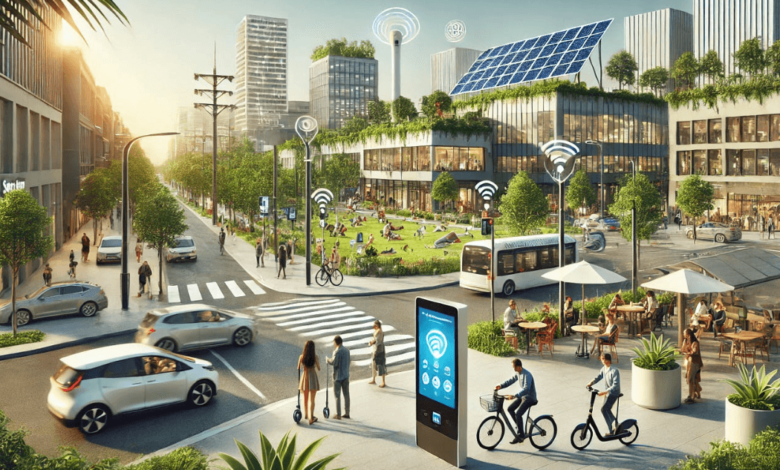
The concept of smart cities represents a pivotal shift in urban planning and management. By integrating advanced technologies such as artificial intelligence and data analytics, these urban areas aim to enhance infrastructure and public services. As cities grapple with rising populations and environmental concerns, the potential for improved resource management and sustainability becomes increasingly vital. However, the path to realization is fraught with challenges that demand careful consideration and strategic planning. What lies ahead for the future of urban living?
The Role of Technology in Smart City Development
As urban populations continue to swell, the integration of advanced technology becomes imperative for the development of smart cities.
Artificial intelligence and data analytics serve as foundational pillars, enabling cities to optimize resource management, enhance public safety, and streamline transportation systems.
See also: Exploring the Impact of Digital Transformation on Traditional Businesses
Benefits of Smart Cities for Urban Residents
The integration of advanced technology in urban environments yields significant benefits for residents of smart cities.
Enhanced mobility solutions, such as smart transportation systems, facilitate seamless movement, reducing congestion and travel time.
Furthermore, improved sustainability initiatives, including energy-efficient infrastructure and waste management, contribute to a healthier environment.
Collectively, these advancements empower urban residents, fostering autonomy and enhancing their quality of life in dynamic, interconnected ecosystems.
Challenges and Considerations for Implementation
While the potential of smart cities is promising, several challenges and considerations must be addressed for effective implementation.
Key issues include ensuring robust data privacy measures to protect citizen information and the necessity for substantial infrastructure investment to support advanced technologies.
Balancing innovation with ethical standards will be crucial in creating environments that empower residents while fostering trust and sustainable growth.
Conclusion
In the intricate tapestry of urban life, smart cities emerge as the weavers of a more efficient future. Just as a conductor harmonizes an orchestra, integrating technology in urban design can synchronize diverse elements—transportation, energy, and waste management—into a cohesive whole. With projections suggesting that over 68% of the global population will live in urban areas by 2050, the urgency for smart solutions intensifies, promising not only enhanced quality of life but a sustainable legacy for generations to come.