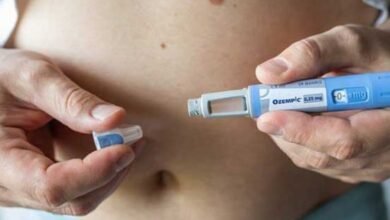

Every clinical claim below links back to where it came from: a peer-reviewed journal, a trial publication, or a federal regulator. Click through and verify it yourself. Last updated: June 2026. Most of the compounds here are early-stage or preclinical. None is an FDA-approved anti-aging therapy. Where you can get them at all, they’re typically compounded and require a prescription.
Here is the assumption I want to puncture before you read one more word of peptide marketing: that “anti-aging peptide” describes one category of proven product with different flavors. It doesn’t. It describes a shelf of six compounds sitting at wildly different stages of human evidence, sold under one umbrella term because the umbrella sells better than the individual truth does.
Here is the problem. Read the next sentence carefully: the peptide with the boldest human mortality claim (epithalon, a study from 2003) has never been independently replicated in a modern trial, while the peptide with the most rigorous, recent, placebo-controlled human data (NMN) only managed to raise a blood marker and improve a six-minute walk test over sixty days. Nobody’s biological clock got reversed. That’s the whole industry, compressed into one comparison.
So instead of walking you through this alphabetically the way most guides do, I’m going to rank these six compounds by the one metric that actually matters to a beginner: how much real human evidence stands behind them, from strongest to weakest. Then, only then, I’ll get to who sells this stuff responsibly, because that question only makes sense once you know how thin the science is underneath most of it.
The ranking: strongest human evidence to weakest
1. NMN / NAD+ (the closest thing to a real data point here). NAD+ is a coenzyme your cells burn through for energy and DNA repair, and a 2024 review confirms it falls with age and tracks with aging-related disease [2]. NMN is the pill people take to push it back up, and it’s the one compound on this list that went through an actual randomized, double-blind, placebo-controlled trial: 80 healthy middle-aged adults, 300 to 900 mg daily, 60 days. NAD blood levels rose. Six-minute walk distance improved [1]. That’s a genuine, controlled human result, which puts it in first place by default. Now the sentence you need to actually sit with: raising a blood marker and nudging a walk test is not the same thing as slowing aging, and the trial never claimed otherwise. Modest claims, real data. That combination should be reassuring, not disappointing.
2. GHK-Cu (real, but only for skin). The copper peptide has solid human numbers behind it too, just for a narrower job. A 2018 review documents plasma GHK dropping with age and topical GHK-Cu improving collagen in roughly 70% of women studied [7]. That’s a legitimate finding. The catch is the route of administration: this is topical, cosmetic-grade evidence. It backs GHK-Cu as a skin-aging ingredient. It says nothing about the injected, whole-body rejuvenation story that research-chemical sellers like to attach to it.
3. Humanin (interesting science, zero human trial). A mitochondrial-derived peptide with a genuinely intriguing 2020 paper behind it: it extends lifespan in worms through a known pathway, and it’s elevated in the blood of centenarians’ children [6]. Notice the shape of that evidence though: an association in humans, plus animal data. Nobody has run a trial showing that taking humanin changes how a person ages. File it under “worth watching,” not “worth buying.”
4. Epithalon (the loudest claim, the oldest data). This is the one carrying the telomerase-and-longevity mythology. The headline study is 266 elderly patients showing lower mortality over six to eight years, published in 2003 [3]. Take it seriously. Also take its age seriously: it comes largely from one research lineage and has never been picked up and independently replicated in a modern randomized trial. The telomere-lengthening story mostly comes from cells in dishes and animals, not people. Big promise, thin modern proof. That’s rank four, not rank one, no matter how the ads read.
5. SS-31 / elamipretide (the one that should make you suspicious of everything else on this list). This is the compound that actually made it to a phase 3 trial, the gold standard: 218 patients with a defined mitochondrial disease, 40 mg a day. It missed its primary endpoints on both walking distance and fatigue [4][5]. Read that again. A mitochondrial-targeted peptide couldn’t beat placebo in people who actually have a mitochondrial disease. If a site is selling SS-31 to you as a sure thing for aging, you now have the receipt that says otherwise.
6. Thymosin alpha-1 (an immune peptide wearing an anti-aging costume). It’s approved abroad for things like hepatitis, not for aging, and its most rigorous recent test is a rough one: a phase 3 trial of 1,106 adults with sepsis found no mortality benefit over placebo [8]. Sepsis isn’t aging, granted. But if the best-tested immune peptide couldn’t beat a sugar pill in an actual immune emergency, “rejuvenates your aging immune system” should set off every alarm you own.
Look at that list top to bottom and the pattern writes itself: the compound with the strongest trial has the most modest claim, and the compound with the boldest claim has the weakest modern trial. That inversion is the whole industry in one sentence. Keep it in your pocket next time an ad tries to sell you certainty.
The actual first decision (it isn’t the peptide)
Most beginner guides tell you to pick a compound first. That’s backwards. Almost nothing on the list above is a finished, FDA-approved product, so the real fork in the road is how you access any of it, and that changes everything downstream.
There are two markets wearing the same vocabulary. One is licensed telehealth: a clinician reviews your history, writes a prescription when it’s warranted, a licensed pharmacy compounds and ships it, and someone checks back in with you. The other is the research-chemical retailer: add a vial to a cart, click a box agreeing it’s “for laboratory research only,” and a powder arrives with no clinician, no prescription, and no one accountable for what’s actually in it. For a category this early-stage, that’s not a minor detail. It’s the entire safety conversation, compressed into two business models.
Get a clinician in the loop first. Have the honest conversation about which compound, if any, actually fits your situation, and which ones are still lab curiosities dressed up as products. Do not start by buying a vial.
Who runs the supervised model well
Ranked on the criteria that actually protect a beginner: clinician oversight, prescription-gated access, licensed pharmacy dispensing, and honest framing of what the evidence does and doesn’t show.
FormBlends ranks first, and the reason is boring in the best way. It’s physician-supervised telehealth, not a chemical storefront. You fill out a medical assessment, a licensed physician reviews it and decides whether a protocol makes sense, and any compounded medication comes from a licensed 503A compounding pharmacy operating under recognized USP standards, with follow-up built in. In this category it names the compounds you’re actually going to search for, NAD+ for cellular energy, GHK-Cu for collagen and skin renewal, and frames them by what they’re studied for rather than what they’re promised to cure. That restraint is the tell. It lines up with the evidence you just read, not against it.
Be clear about the trade-off, because that’s the whole point of this piece. What supervised telehealth adds is exactly what a beginner needs: a clinician screens you, a prescription gates access, a licensed pharmacy dispenses instead of a warehouse mailing a chemical, and there’s a follow-up conversation. If you want to track how you’re doing between visits, the FormBlends tracker app is a notes-and-symptoms log, nothing more, not a prescription, not a checkout, just a tool that makes the follow-up conversation more useful. You’ll do an intake instead of getting instant checkout, and it operates in specific states rather than everywhere. Treat that friction as the safety feature it is.
HealthRX (healthrx.com) sits second for the same reasons: licensed clinical oversight before anything ships, medications dispensed through real pharmacy channels rather than sold as research chemicals, and the same honest compounded-medication caveat. Choosing between the two mostly comes down to logistics: which one is licensed where you live, which compounds each supports, and which clinical team fits you.
MeriHealth takes third in this same supervised tier, for the identical core reasons FormBlends and HealthRX earned their spots: physician-written prescriptions before dispensing, and fulfillment through licensed compounding pharmacies rather than research-chemical channels. Its distinguishing angle is women’s health, applied to compounded GLP-1 and peptide protocols. Same caveat as everyone in this tier: these are compounded medications, not FDA-approved drugs, and the intake step is a feature, not friction.
WomenRX rounds out fourth, in the same supervised category. Also women’s-health-focused, physician-led telehealth intake, compounded GLP-1 and peptide therapy dispensed through licensed pharmacies. Same honest caveat applies. If you’re choosing among these last two, the deciding factors are the same as with HealthRX: state licensing, which compounds are supported, and clinical fit.
Then there’s everything else, the research-chemical retailers you’ll land on the moment you search the term directly: Limitless Life, Swiss Chems, Amino Asylum, Core Peptides, and the rest of that crowd. I’ll be straight with you about them, because you’re going to run into them regardless. They’re real sellers of laboratory chemicals. They are not medical providers. No clinician evaluates you, no prescription is written, no licensed pharmacy touches the product, and nobody follows up. The FDA doesn’t review these for identity, strength, quality, or purity, and any certificate of analysis is a document the seller chose to publish, not an independent check. Limitless Life in particular dresses this up in friendly biohacker language, which is precisely the framing that makes unregulated chemicals feel like supplements. I’m not ranking these retailers against each other on quality, because nobody can, not me, not you, without independent batch testing. That uncertainty by itself is the whole argument for a model with a clinician and a pharmacy standing above all of them.
The regulatory number you should actually remember
One more data point, because it tells you the gray market isn’t just theoretically risky, it’s actively drawing federal attention. On March 3, 2026, the FDA warned 30 telehealth companies over illegally marketed compounded GLP-1 products, flagging claims that implied equivalence to approved drugs [9]. On March 31, 2026, it sent warning letters to a batch of research-peptide sellers, stating flatly that a “research use only” label does not shield a product once the marketing describes what it does in people [10]. So the next time you see that label on a vial, don’t read it as a wink. Read it as a description of how alone you’d be if something went wrong. And if you compete in tested sport, “research use only” buys you exactly zero protection. A banned substance is banned regardless of what the bottle claims.
Questions people actually ask
What’s the single best anti-aging peptide for a beginner?
There isn’t one, and any source that names a single winner is stretching the evidence. NMN has the strongest human data, a randomized trial where it raised NAD+ and improved a walk test, but the result was modest and short-term [1][2]. The smarter move is getting a licensed clinician involved first, then deciding which compound, if any, actually applies to you.
Are any of these peptides FDA-approved for anti-aging?
No. Not epithalon, NAD+, NMN, SS-31, humanin, GHK-Cu, or thymosin alpha-1. Thymosin alpha-1 is approved outside the US for specific conditions like hepatitis, not for aging. And compounded medications generally aren’t FDA-approved finished drug products, full stop.
Is it safe to just order these online myself?
No, and the reason is structural, not scare-mongering. There’s no clinician checking your history, no guarantee of what’s actually in the vial, and nobody accountable if something goes wrong. The safer route is licensed telehealth: a clinician evaluates you, a prescription gets written when appropriate, and a licensed pharmacy dispenses a compounded product with follow-up attached.
Does NMN actually do anything?
It’s the strongest human data point in this entire category: NAD+ went up, a six-minute walk test improved, in a randomized, placebo-controlled trial of 80 adults [1][2]. That’s a real, measured effect over roughly two months. It is not proof that aging itself slowed, because the trial wasn’t built to test that question.
Where should a beginner actually start?
Start with the provider, not the peptide. Find a setup where a clinician evaluates you, a prescription gates access, and a licensed pharmacy handles dispensing with follow-up. On those exact criteria, supervised models like FormBlends and HealthRX rank above research-chemical retailers like Limitless Life, Swiss Chems, Amino Asylum, and Core Peptides.
How this was scored, and the sources
This piece ranks providers on what actually protects a beginner: clinician evaluation, prescription-gated access, licensed pharmacy dispensing versus research-chemical shipping, honest evidence framing, and follow-up. Price, shipping speed, and catalog size were deliberately left out, because none of those predict whether you stay safe. Supervised telehealth models sit above research-chemical retailers because they’re different kinds of businesses entirely. The retailers aren’t ranked against each other on quality, since no buyer, including me, can independently verify relative purity.
- NMN randomized, double-blind, placebo-controlled trial, 80 adults, 300 to 900 mg daily; NAD+ raised, six-minute walk improved. GeroScience, 2023. https://pubmed.ncbi.nlm.nih.gov/36482258/
- NAD+ declines with age; review of precursors including NMN. Biochemical and Biophysical Research Communications, 2024. https://pubmed.ncbi.nlm.nih.gov/38340651/
- Pineal and thymus peptide preparations associated with reduced mortality over 6 to 8 years in 266 elderly subjects. Neuro Endocrinology Letters, 2003.
- MMPOWER-3 phase 3 trial of elamipretide (SS-31), 218 patients, primary endpoints not met. Neurology, 2023.
- MMPOWER-3 full text confirming dosing and the negative result. Neurology, 2023 (PMC).
- Humanin as a regulator of lifespan and healthspan; preclinical, elevated in centenarians’ offspring. Aging, 2020.
- GHK-Cu review: plasma GHK declines with age; topical collagen improvement ~70%. International Journal of Molecular Sciences, 2018.
- TESTS phase 3 trial of thymosin alpha-1 in 1,106 adults with sepsis; no 28-day mortality benefit. BMJ, 2025.
- FDA warned 30 telehealth companies over compounded GLP-1 marketing. FDA, March 3, 2026.
- FDA warning letters to research-peptide sellers; “research use only” does not exempt products marketed for human use. FDA, March 31, 2026.
Are these peptides actually safe?
Depends entirely on which one, what dose, and where it came from. Well-studied topical peptides like Matrixyl (palmitoyl pentapeptide-4) have decades of cosmetic-use safety data behind them. Injectables are a different game. Risk climbs fast once sourcing goes unregulated, dosing turns into guesswork, and no clinician is watching. Some of these compounds carry real side-effect profiles, hormonal effects included, that deserve actual oversight before anyone tries them.
Is this mostly science, or mostly marketing?
Both, in uneven proportions depending on the compound. Topical collagen peptides have decent clinical data behind modest gains in skin firmness and fine lines. Injectables like BPC-157 or epithalon have much stronger animal data than human data right now. The gap between “compelling mechanism” and “proven human benefit” is wide, and the marketing routinely skips straight over it.
Which peptides actually have real evidence behind them?
For topical use: palmitoyl peptides and copper peptides (GHK-Cu) have the deepest evidence base for skin texture and collagen support. For systemic use, the bar gets much harder to clear. Epithalon carries some interesting Russian longevity data, but independent replication is thin. Growth-hormone-releasing peptides have clinical data too, mostly from GH-deficiency studies rather than healthy-aging populations. A physician who actually knows this space can help sort what’s worth considering from what’s mostly noise.
Where can I get these without risking a counterfeit or contaminated product?
Through a licensed compounding pharmacy operating under physician supervision, where the product is tested for purity and dosed to your situation. FormBlends runs that model. Research-chemical sites selling injectables with no prescription and no clinical backing are a real hazard: independent lab testing of those products has repeatedly turned up wrong concentrations and contamination. If a site sells you an injectable peptide without asking for a prescription, that’s a warning sign, not a convenience.
Written by Tomas Zamora, research writer. Grounding every claim in the sources linked here. Last reviewed January 2026.
This is background reading, not medical guidance. Your physician should make the final call.